Background
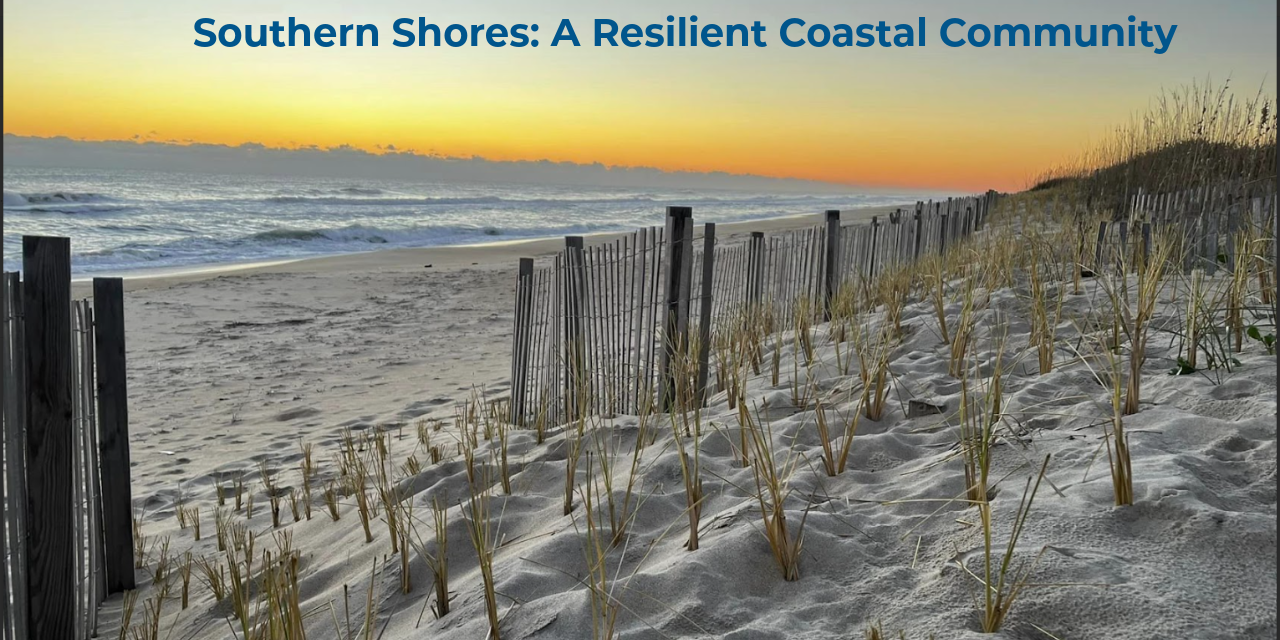
Southern Shores is a dynamic barrier-island community on North Carolina’s northern Outer Banks coast where long-standing neighborhoods and natural systems converge along a narrow and ever-changing shoreline. Bordered by the Atlantic Ocean and Currituck Sound, the Town faces both acute storm-related risks and chronic challenges associated with sea level rise, tidal flooding, and shoreline change.
Recent data highlight the extent of these issues: regional recorded data shows the number of high tide flooding events (+0.54m above MHHW) each year are increasing (NOAA Climate Explorer). Meanwhile, the Town continues to implement beach renourishment and dune maintenance programs to combat ongoing erosion and sand loss.
Key Risk Factors
Southern Shores experiences flooding and erosion pressures from multiple directions and sources:
- Tidal inundation and king tides that flood streets and low-lying yards even on calm days.
- Storm surge and wave overwash during hurricanes and nor’easters, which erode dunes and damage oceanfront properties.
- Heavy rainfall and stormwater flooding overwhelm drainage infrastructure in developed areas.
- Flooding of canals and back-barrier neighborhoods, particularly during high tides or blocked outfalls, which can cause water to back up into yards, driveways, and roadways.
Natural systems such as beaches, dunes and wetlands help buffer wave energy and provide ecological value, but these areas are increasingly stressed by recurrent flooding and sea level rise.
RCCP Program Overview
The Town of Southern Shores is partnering with the North Carolina Division of Coastal Management (DCM) through the Resilient Coastal Communities Program (RCCP). This initiative provides the funding and technical expertise needed to better prepare for flooding, storms, and rising sea levels.
The RCCP is a four-phase process. Southern Shores is currently working through Phases 1 and 2, which focus on understanding our specific risks and creating a plan of action.
Phase 1: Understanding Our Vulnerabilities
Before we can fix problems, we must understand them. In this phase, the project team will analyze data, maps, and local studies to pinpoint how flooding and erosion impact our town.
- What we are doing: Assessing the safety of critical infrastructure, natural environments, and public assets.
- Community Role: We will gather input from residents to ensure local knowledge is part of the solution.
- The Goal: A clear map of where Southern Shores is most at risk.
Phase 2: Creating a Strategy
Using the data from Phase 1, we will develop a Resilience Project Portfolio, a prioritized list of real-world solutions.
- What we are doing: Identifying structural and nature-based projects to protect property and resources.
- How we decide: Projects are ranked based on feasibility, funding availability, and community benefit.
- The Goal: A list of high-priority projects that we can design and fund in Phase 3.
Community Engagement Plan
Community engagement is central to the RCCP process. Southern Shores has established a Community Action Team (CAT) composed of residents and civic representatives to help guide project development and ensure that local priorities are reflected in the Town’s Resilience Strategy.
CAT members play a key role throughout the RCCP process by serving as the local voice of the project—ensuring the plan reflects community priorities and lived experiences. They share knowledge about local flooding, erosion, and infrastructure issues; help identify what’s most important to protect, such as homes, roads, natural areas, and community spaces; and review maps and data to verify that they accurately reflect on-the-ground conditions. The CAT also provides input on proposed resilience and adaptation strategies, builds consensus among residents and partners on the best path forward, and helps shape the final Resilience Strategy and Project Portfolio so it is realistic, community-supported, and fundable.
Community Action Team (CAT) Members
- Elizabeth Morey, Mayor
- Lori Trawinski
- Robert McClendon
- Nancy Sheehan
- Richard Filling
Beyond the CAT, there will be multiple opportunities for the public to get involved throughout the RCCP process.
Public Involvement
- CAT Meetings – providing direction, feedback, and local knowledge at key project milestones.
- Interactive Project Website (hosted here on Social Pinpoint) – featuring maps, surveys, and draft materials for public review and comment.
- Community Events – outreach opportunities such as the Southern Shores Civic Association Earth Day Event (April 18, 2026) to share information and gather input on resilience planning.
Together, these activities will ensure that the Southern Shores RCCP planning process is guided by the people who know the community best—its residents.